There’s something quietly magical about turning a mound of flour and a few eggs into silky homemade pasta. While boxes of dried pasta will always have a place in the cupboard, nothing quite compares to the taste and texture of fresh pasta made by hand. This step-by-step guide is built to help anyone learn how to make fresh pasta at home, from mixing the very first crumbs of dough all the way to cutting tender ribbons.
Plenty of people assume that making homemade pasta is reserved for trained chefs, but the truth is far friendlier than that. With a little patience, a humble pasta dough recipe, and a couple of common tools, perfect pasta is well within reach. Anyone who has ever wanted to make homemade pasta but felt a touch intimidated will be glad to discover that the whole process is much simpler than it looks. Once a cook tastes the difference, it’s hard to go back to anything else.
Fresh Pasta Ingredients
The real beauty of fresh homemade pasta is how few ingredients it actually needs. Most classic pasta recipes start with little more than flour and eggs, yet the quality of those two staples makes all the difference. Below is everything a cook needs to put together a reliable, foolproof pasta dough.
- 00 flour — a finely milled Italian flour that gives the dough a smooth, tender bite and is the gold standard for a silky pasta sheet.
- Semolina flour — adds structure and a gentle chew, and it doubles beautifully as a dusting flour later on.
- Eggs — best used at room temperature, since cold eggs make the dough stiff and harder to work.
- A pinch of salt — to season the dough itself.
- A little olive oil (optional) — for a more supple, pliable dough.
- A few drops of water — only ever added if the dough is too dry and refuses to come together.
This homemade pasta recipe is endlessly flexible. Some cooks love a rich, golden egg pasta, while others prefer to swap in whole wheat pasta for a nuttier, heartier noodle. A simple flour-and-water version, made without eggs, comes closer to the regular pasta found in many southern Italian kitchens. Whichever route a cook takes, the goal is the same: a smooth, springy ball of perfect pasta dough.
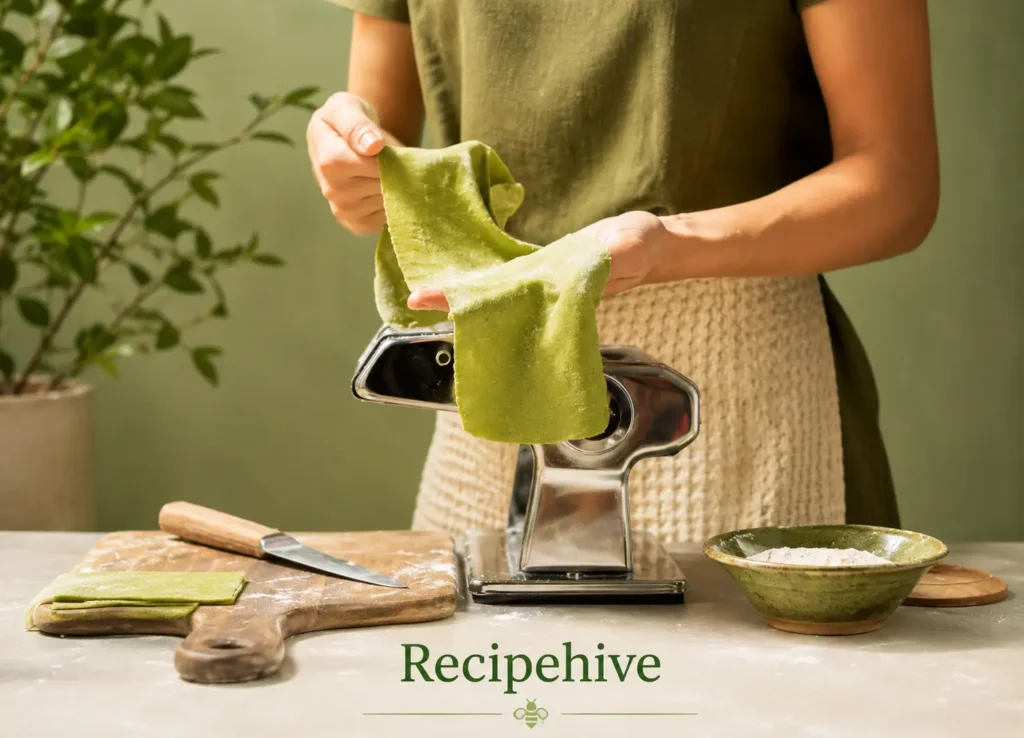
How to Make Fresh Pasta (Ingredients & Directions)
Learning to make pasta from scratch comes down to two things — good dough and a little practice. This section covers the tools, a quick ingredient recap, and the full directions for turning fresh pasta dough into finished noodles.
Tools for Pasta Making
A bit of basic kit makes pasta making far easier, though almost none of it is essential. A pasta machine or hand-crank pasta maker takes the guesswork out of rolling, while a trusty rolling pin works just as well for those who prefer to do it the old-fashioned way. Cooks with a stand mixer can clip on a pasta roller and feed sheets through with very little effort; the roller attachment also pairs with a pasta cutter attachment for slicing. For anyone who makes pasta often, an electric pasta machine removes nearly all of the manual work. A pasta drying rack and a baking sheet round out the lineup, giving the finished strands somewhere to rest.
Ingredients at a Glance
- 1 ¾ cups (about 220 g) of 00 flour, plus extra semolina flour for dusting
- 3 large eggs, at room temperature
- A pinch of salt
- A teaspoon of olive oil (optional)
- A few drops of water, if needed
Step-by-Step Directions
This step-by-step method works whether a cook chooses to use a pasta machine or a rolling pin.
Make a well. Mound the flour and eggs on a clean work surface, then make a well in the center and crack the eggs into the middle. (A large bowl works too, if a tidy counter feels safer.) ‘
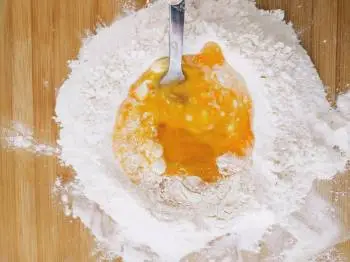
Mix gently. Using a fork, beat the eggs in the center, slowly pulling in flour from the inside walls until a shaggy mixture forms and the dough comes together.
Knead the dough. Once the dough comes together, use your hands to knead. Knead the dough for a solid 8 to 10 minutes until it turns smooth and elastic. The dough should feel soft and supple but never sticky — add a few drops of water if the dough is too dry, or dust in a little flour if it feels tacky. If the edges crack while shaping, simply wet your hands and smooth them back together.
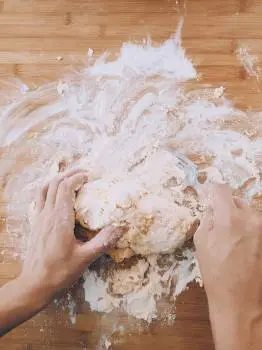
Rest the dough. Shape the dough into a ball, wrap it in plastic wrap, and let it rest at room temperature for about 30 minutes. This pause lets the gluten relax so it rolls out smoothly. Skipping this step is the most common reason dough fights back, so it pays to let the dough rest properly.
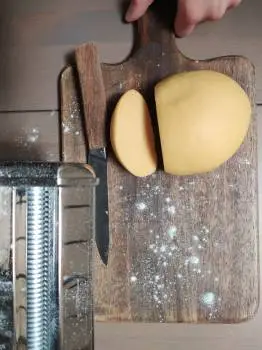
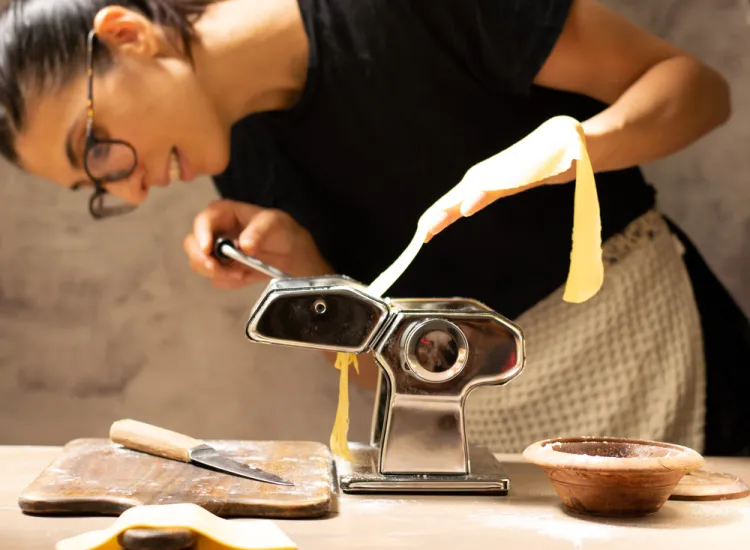
Roll the dough. Cut the dough in half and keep the dough that isn’t in use wrapped so it doesn’t dry out. Flatten one piece of dough and, on a machine, start at the widest setting, then pass it through, fold, and repeat — narrowing the setting with each pass until a thin pasta sheet forms. Cooks without a machine can use a rolling pin to roll the dough as thinly as possible.
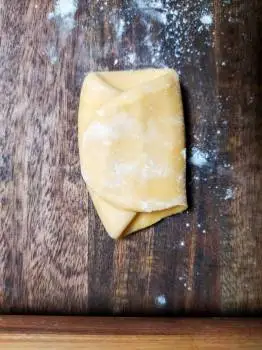
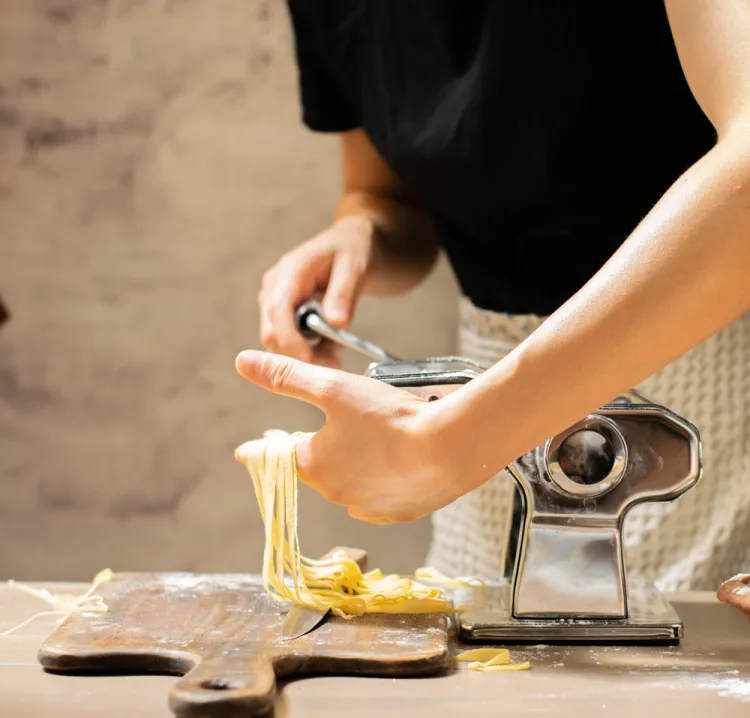
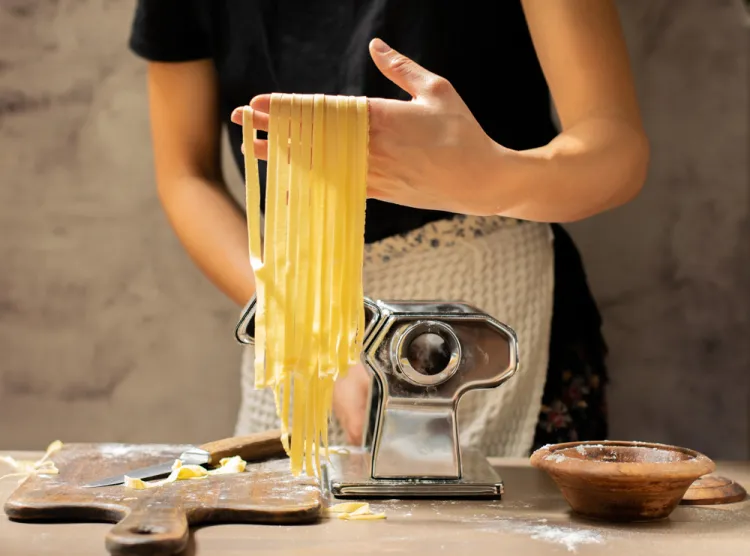
Cut the pasta. Lightly dust the pasta sheet with semolina to keep the pasta from sticking together. Run it through the desired pasta cutter attachment, or fold the sheet loosely and use a sharp knife or cutter to cut the pasta by hand. Toss the freshly cut pasta with a little flour, then drape the strands of pasta over a pasta drying rack or spread them on a baking sheet.
Repeat. Work through the remaining dough pieces the same way until all of the dough has become beautiful pasta noodles.
Cooking the Pasta
Fresh pasta cooks remarkably fast, so it helps to have everything ready first. Bring a large pot filled with several cups of water to a rolling boil. As soon as the boiling water is ready, add a generous pinch of salt — that salt in the pasta water seasons the noodles from the inside out. Lower the noodles into the boiling salted water and cook your pasta for just 2 to 3 minutes, tasting as it goes. Before draining, scoop out a mugful of the starchy pasta cooking water; it works wonders for loosening and binding sauces later.
Storing Fresh Pasta
If the noodles aren’t headed straight for the pot, they store easily. Let the pasta noodles dry fully on a rack, or freeze them in loose nests. Frozen pasta keeps for several weeks and can be dropped straight into boiling water — no thawing required. Unlike dried pasta from a box, this homemade version cooks up tender in a fraction of the time.
How to Serve Tagliatelle
Tagliatelle and its close cousin fettuccine are long, flat ribbons, and they belong with rich, clingy sauces that grab onto every strand. Of all the pasta shapes a cook can make from a single fresh pasta dough, these wide ribbons may be the most rewarding to serve.
A classic ragù — slow-cooked beef or pork in tomato and wine — is the natural partner, but tagliatelle is just as happy tossed with brown butter and sage, a creamy mushroom sauce, or a simple swirl of olive oil, garlic, and grated cheese. The key is to finish the noodles right in the pan with the sauce, adding a splash of that reserved pasta cooking water so everything turns glossy and clings together.
For a friendly tip to make perfect pasta plates every time: serve tagliatelle the moment it’s tossed, while it’s hot and silky. A few minutes of effort with this fresh pasta recipe rewards everyone at the table with a bowl of comforting, homemade goodness that no store-bought box can match.
